Speaking exam (Sprechen): one take, real tasks
The recording is made once, no retakes. There is a partner opposite you as in the real exam; preparation time is given or not depending on your level.
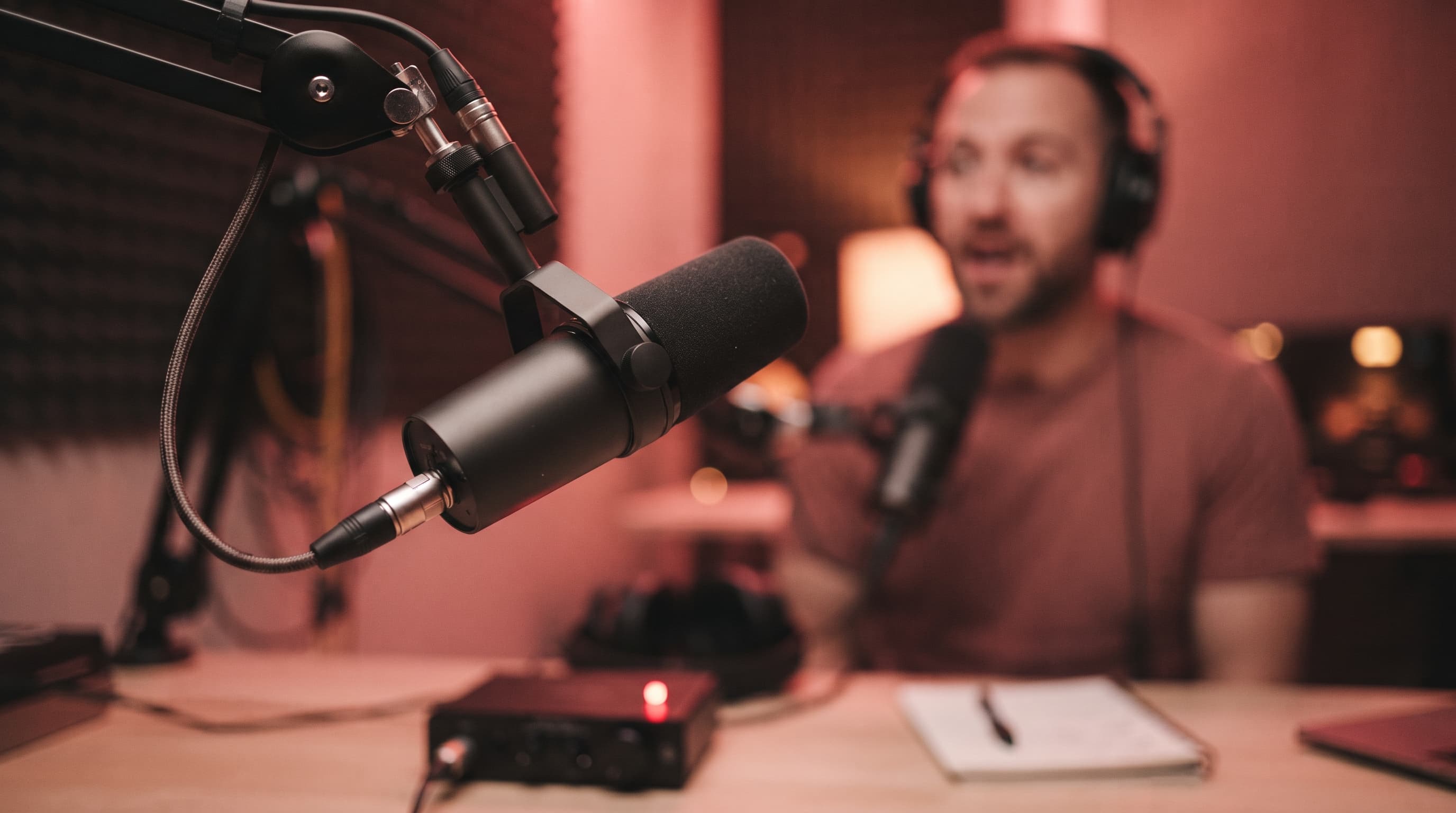
Sprechen is the section candidates fear most, and the source of the fear is not the language but the situation: a stranger opposite you, the clock running, no taking back what you said. That situation cannot be practised alone at home; only with a counterpart, against the clock, in one take.
The speaking section on Level Exams sets up exactly that situation. The task structure comes from the level's official format: introducing yourself, asking questions with cards, making requests, a presentation, a discussion; whatever the level has. The counterpart is an AI partner standing in for the real exam's partner or examiner; you take turns, record your answer, and there is no second take.
Below: how the real Sprechen works, how Level Exams applies it, and preparation time and number of tasks per level.
How the real telc Sprechen works
The oral exam is usually taken in pairs (Paarprüfung), sometimes in threes; at some levels such as C2 it is individual. Two assessors sit opposite you: one leads the conversation, the other scores.
At the lower levels the tasks are fixed: introducing yourself, spelling, saying numbers, question and answer with cards, requests and reactions. From B1 upwards: getting to know each other, presenting an opinion on a topic and planning something together; at the higher levels a presentation, a summary and a discussion.
From B1 upwards, note-taking time is given in a separate preparation room before the oral exam; at A1 and A2 there is no preparation and the task starts directly.
Scoring is task-based: each task has its own criteria (task fulfilment, vocabulary, grammar, fluency, pronunciation) on the official assessment form. Not attempting a task at all forfeits all of its points.
Speaking at Goethe and ÖSD
At telc the oral exam is usually held in pairs or threes and falls on the same day as the written part; from B1 onwards there is a separate preparation period.
At Goethe, speaking at B1, B2 and C2 is a separate module: it can have its own day, its own score and its own certificate. However well the other modules go, they do not compensate for it.
At ÖSD the oral module can be taken separately from the written one and is certified separately.
Task types differ by provider, but what is measured is largely the same: introducing yourself, asking and answering questions, giving an opinion, and planning something with your partner.
The speaking tasks here follow the telc format and your partner is an AI. If you are sitting Goethe or ÖSD the practice transfers directly; see the order of tasks in that provider's own sample exam.
How Level Exams reproduces speaking
The turn order, the preparation time, the partner's lines and the scoring criteria come from the level's format file; there is no level-specific rule in the engine.
The AI partner speaks in turn
The partner's lines are pre-written and voiced in natural German. The partner speaks, you answer; the next turn opens only when your recording ends, just like taking turns in the real exam.
One take, no retakes
Once the recording starts you cannot stop and start over. If you stumble, you recover and carry on; that is how exam day will be too.
Preparation time by level
At levels with preparation time a separate preparation screen opens with its own clock; at levels without it the task starts directly. The time is read from the format file.
Task cards on screen
Keyword card, question cards, discussion text, checklist: whatever the level has is shown during the task, as in the real exam.
Recording goes straight to secure storage
Your voice is uploaded from the browser directly to encrypted storage; only you and the assessment system can access it.
Task-based score and feedback
Your recording is transcribed and scored task by task with the level's official criteria. For every criterion: the score, what was missing, how it should have been said; in your language.
The speaking section by level
Preparation time, number of tasks, duration and the retake rule come live from the format file.
Why you should practise with a partner, not a mirror
You learn to wait your turn
In the real exam you must listen while your partner speaks and react on the spot. That never happens when you practise alone.
One-take pressure becomes normal
A candidate who feels 'I can't take that back' for the first time on exam day freezes. One who has felt it ten times in mock exams recovers.
Task-based scoring becomes visible
Seeing which task cost you points lets you say 'I did not form the request sentence' instead of 'my German is bad'; and that is something you can practise.
How to prepare for Sprechen
- 1
Automate the set phrases
Introducing yourself, asking questions and making requests use fixed phrases at every level. Being able to say them without thinking frees your mind for the content.
- 2
A bridging sentence instead of silence
Bridging phrases like 'Moment, ich überlege' are better than leaving the recording empty; scoring rewards communication.
- 3
Keep preparation notes short
At levels with preparation time, write key words, not full sentences; speaking earns points, reading aloud does not.
- 4
Listen to your own recording
Listen to your recording alongside the feedback in the results report; hearing where you lost points on a criterion sticks better than reading it.
Frequently asked questions
›Is the partner a real person?
No, it is an AI partner: its lines are fixed and written for the level's task, and its voice is natural German. In the real exam the partner is another candidate or an examiner; for preparation a fixed partner is more predictable and available at any hour.
›Can I re-record?
No. This is a deliberate decision; you cannot in the real exam either. If you want to practise, re-recording is allowed in the speaking tasks of the lesson portal.
›What if I do not have a microphone?
The speaking section requires a microphone; a phone or laptop microphone is enough. If permission is not granted the section does not start, and nothing is scored without a recording.
›Is my pronunciation scored?
It depends on the level. At levels whose official criteria include a separate pronunciation criterion it counts towards the score; at the others it is shown only as additional feedback and not counted.
›Who gives the score?
The recording is transcribed, then the AI scores it twice with the level's official criteria and averages. See the 'AI evaluation' page for details.
Make your first recording before the exam
Take the speaking section of the free mock exam and learn what one take feels like today, not on exam day.
Start the free mock exam